What Is Nnunet?
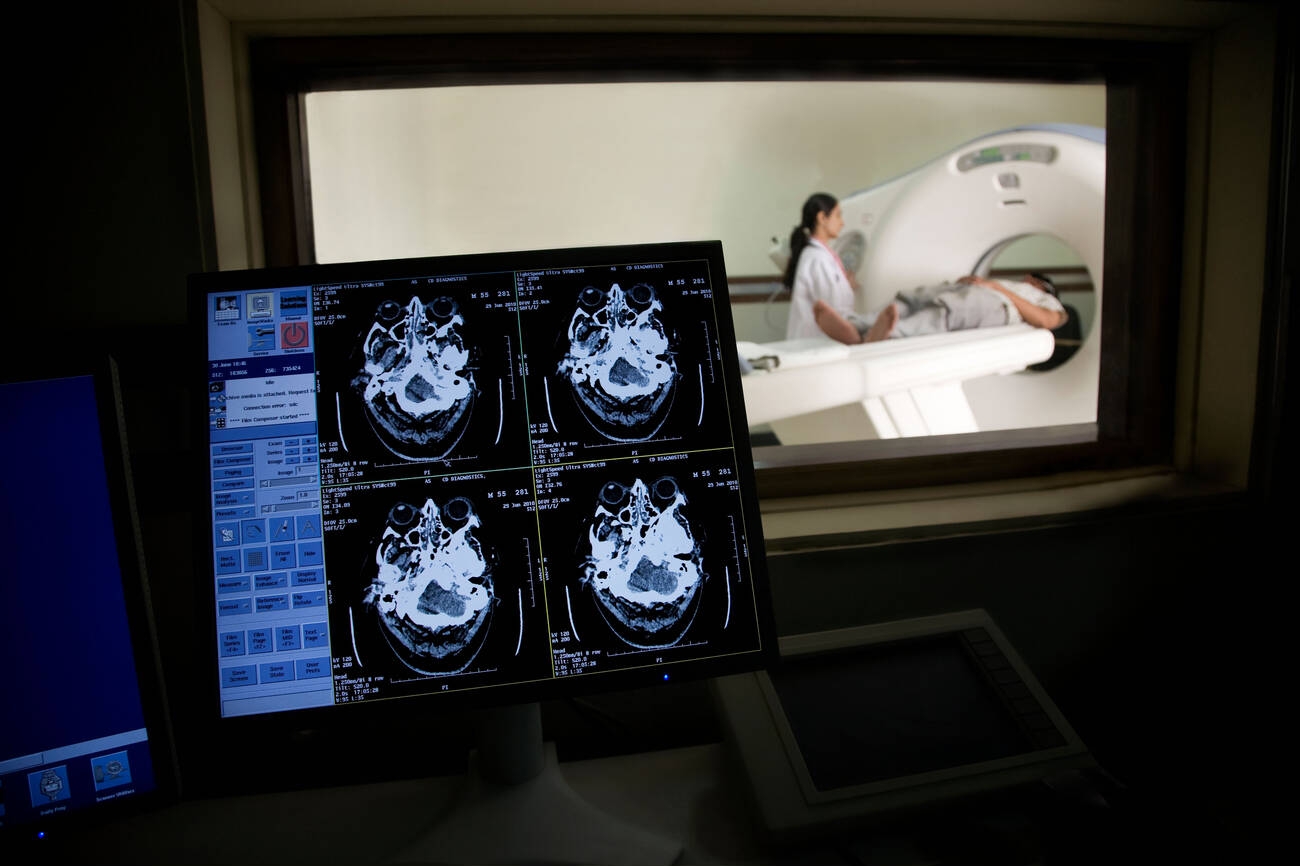
Nnunet is a self-configuring deep learning framework built for biomedical image segmentation. In plain terms, it takes medical images such as MRI or CT scans and learns to outline the structures inside them, for example organs, tumours, or lesions. What makes it different from an ordinary machine learning toolkit is that it configures much of its own pipeline automatically, based on the properties of the dataset it is given.
Segmentation is one of the most common tasks in medical image analysis. A clinician or researcher may need to measure the volume of an organ, track how a lesion changes over time, or prepare an image for treatment planning. Doing this by hand, slice by slice, is slow and varies from person to person. A trained segmentation model can do the same job consistently and at scale, which is why frameworks like this one matter so much in medical research.
How Nnunet Works
The workflow runs in a clear sequence. First, the user organises images and their labels into a structured dataset with a valid dataset definition. The framework then reads the dataset and builds what it calls a dataset fingerprint: a summary of the properties that influence planning, such as image size, spacing, intensity patterns, and the number of labels.
From that fingerprint, it generates a plan. The plan decides how images should be preprocessed, what network configuration fits the task, and how training should be set up. Preprocessing then transforms the data according to the plan, training runs on the chosen configuration, and finally the trained model is used to predict segmentations for new, unseen cases. Postprocessing and ensembling can be added where they improve the result.
Key Features
One of the strongest features is dataset-aware planning. Instead of forcing every task into one rigid setup, the framework adapts its configuration to each dataset, which makes it a reliable starting point across very different imaging tasks. It supports both two-dimensional and three-dimensional configurations, so it can handle flat slices as well as full volumetric scans.
Cross-validation is built into the workflow. Training across several folds gives a more honest picture of how a model will perform on new data than a single train-and-test split, and it makes comparisons between methods fairer. The framework also covers the full pipeline end to end, from preprocessing and training through to prediction, rather than leaving the user to stitch together separate tools.
Another practical strength is reproducibility. Because plans, folds, and environments are defined explicitly, an experiment can be repeated and audited. For research teams, this matters as much as raw accuracy: a result that cannot be reproduced cannot be trusted or built upon.
Who Is It For?
The framework is aimed mainly at researchers and developers working in medical imaging. It is widely used as a strong, standardised baseline: before claiming that a new method is better, researchers first compare it against a carefully configured nnU-Net pipeline. This keeps the field honest, because it separates genuine architectural improvements from differences in tuning, data handling, or computing resources.
It is also useful for teams building real segmentation pipelines for research studies, and for developers who want to extend a proven workflow for their own needs. It is a Python framework with a command-line workflow rather than a point-and-click desktop application, so users should be comfortable working in a terminal and managing a Python environment.
Getting Started
Getting started begins with a clean, isolated Python environment, so that package versions stay reproducible and easy to troubleshoot. Raw data, preprocessed data, and trained results are kept in clearly defined locations, and the dataset is validated before any planning or training begins. A small, controlled first run is the sensible way to check logs, memory use, and outputs before committing to longer experiments.
The framework runs on Linux, Windows, and macOS, with Linux as the primary target in current setup guidance. A graphics processor is strongly recommended for training, since three-dimensional medical images can be large and CPU-only training can be very slow. Checking the generated plan before a long run is good practice, because resource needs vary a great deal between tasks.
Benefits and Limitations
The main benefit is that automation removes many repeated, error-prone decisions while still adapting to each dataset. Teams get a strong baseline quickly, with a workflow they can defend and reproduce. The main limitations are practical: training can demand substantial computing time and memory, environments and storage paths must be configured carefully, and automation does not replace scientific judgement. Data quality checks, expert review, and task-specific validation remain essential, and model outputs should be treated as research results until they have been validated for their intended use.
Frequently Asked Questions
Do I need to tune the network by hand?
No, that is the central idea. The framework derives its configuration from dataset characteristics, so manual architecture tuning is largely unnecessary for a first strong baseline.
Can it handle 3D scans?
Yes. It supports both 2D and 3D configurations, and the plan adapts to the geometry and memory requirements of each task.
Is it a clinical tool?
No. It is a research and development framework. Clinical use would require separate validation, governance, and regulatory review.
Conclusion
Nnunet offers a disciplined, dataset-aware way to build medical image segmentation models without reinventing the pipeline for every new task. By automating planning and preprocessing while keeping experiments reproducible, it gives researchers a baseline they can trust and a foundation they can extend. Anyone working with biomedical images can learn more from the project site at nnunet.com, and should remember that careful validation matters just as much as the model itself.