
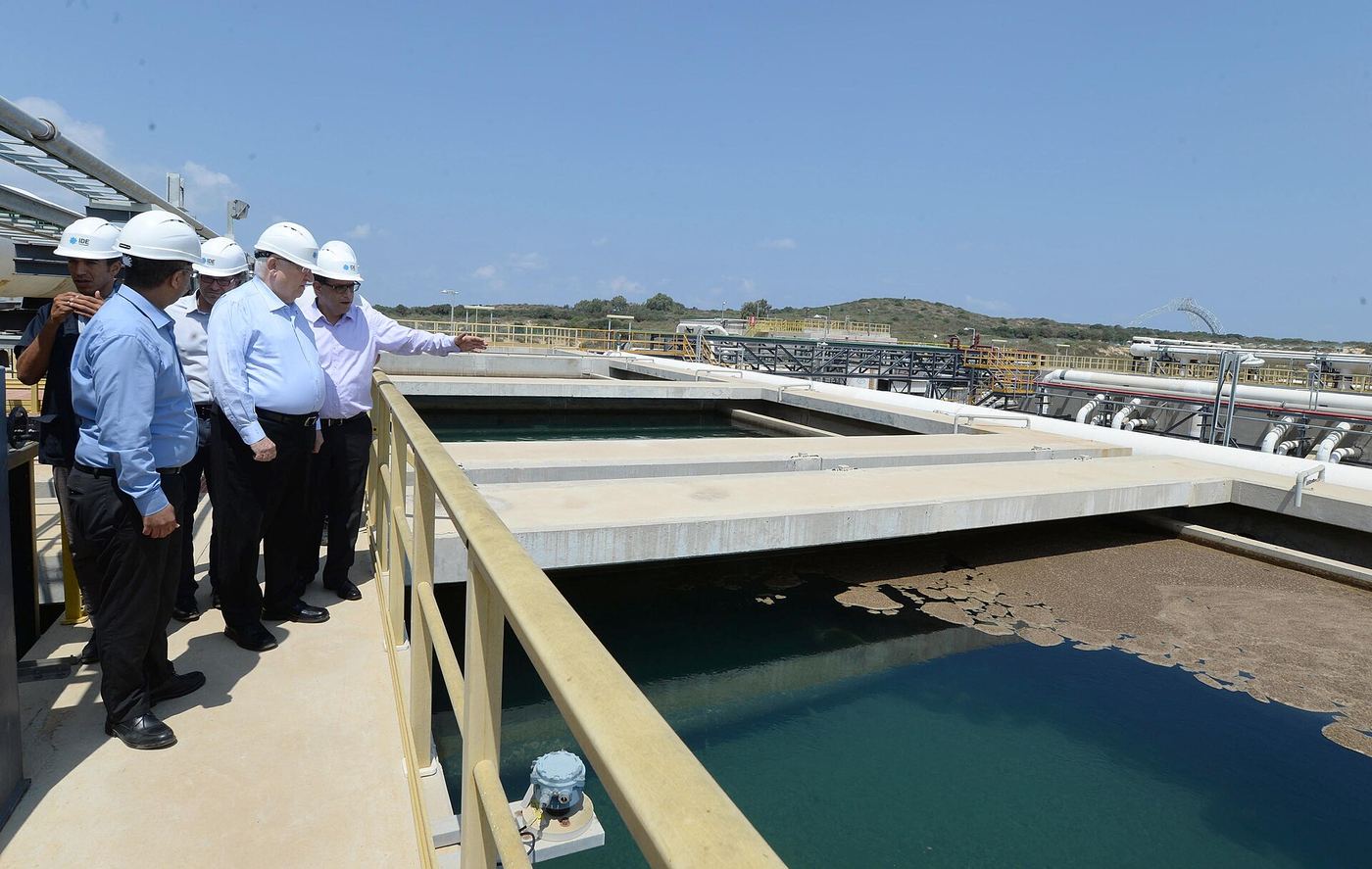
Few countries do the arithmetic of water as starkly as Jordan. Among the most water-scarce nations on Earth, it supplies each citizen with a small fraction of the global average — and hosts, in addition, one of the world’s largest refugee populations. The kingdom’s answer, examined across our environment and infrastructure reporting, is the largest infrastructure project in its history: desalinating Red Sea water at Aqaba and piping it north to Amman, a national water carrier on which the capital’s future quite literally depends.
The scarcity is geological and demographic at once. Rainfall is meagre and declining; the aquifers beneath the desert have been pumped beyond their recharge for decades; the rivers that once defined the region arrive diminished by upstream use. A population that has multiplied through both natural growth and successive refugee waves drinks, farms and builds on a water budget that has not grown in living memory.
The Aqaba–Amman lifeline
The carrier project inverts the country’s hydrology. Instead of waiting on rain and rivers, Jordan will manufacture freshwater from the sea — desalinated at Aqaba, pumped uphill across the desert to the capital, in volumes meant to secure drinking water for millions. The engineering is formidable: energy-hungry desalination, hundreds of kilometres of pipeline, and pumping stations lifting water more than a kilometre in elevation. Renewable energy built alongside is meant to blunt both the cost and the carbon.
International lenders and water agencies, including the World Bank’s Jordan programme, treat the project as a regional landmark — the moment a country stops managing scarcity and starts engineering its way out of it.
Conservation remains the twin pillar
Engineers stress that supply alone cannot win. Jordan already reuses nearly all its treated wastewater in agriculture, among the world’s highest rates; the war on leaking pipes — which lose a crippling share of Amman’s water — and tariffs that price waste while protecting the poor are the unglamorous halves of the strategy.
Farmers face the hardest adjustment
Agriculture drinks the majority of Jordan’s renewable water while contributing a small share of its economy — the imbalance at the centre of every national water plan. The adjustment is already visible in the Jordan Valley: drip irrigation replacing flood channels, greenhouses multiplying yields per litre, and lower-value, thirstier crops slowly yielding to produce the water budget can honour. None of it is painless in a country where farming is heritage as much as business, and governments tread carefully around rural livelihoods. But agronomists point to the direction of travel as the story: Jordanian farmers, farming one of Earth’s driest countries, have become world-class misers of water, and their techniques are studied by dry regions everywhere. The carrier may secure the cities. The countryside’s survival depends on this quieter revolution, measured not in megaprojects but in litres per tomato.
In the world’s driest neighbourhood, water is destiny written in advance. Jordan’s carrier is an attempt to revise the draft — with seawater, sunlight and steel. If it succeeds, its lessons will be studied from Morocco to Central Asia by every dry country watching the same clouds fail to gather.